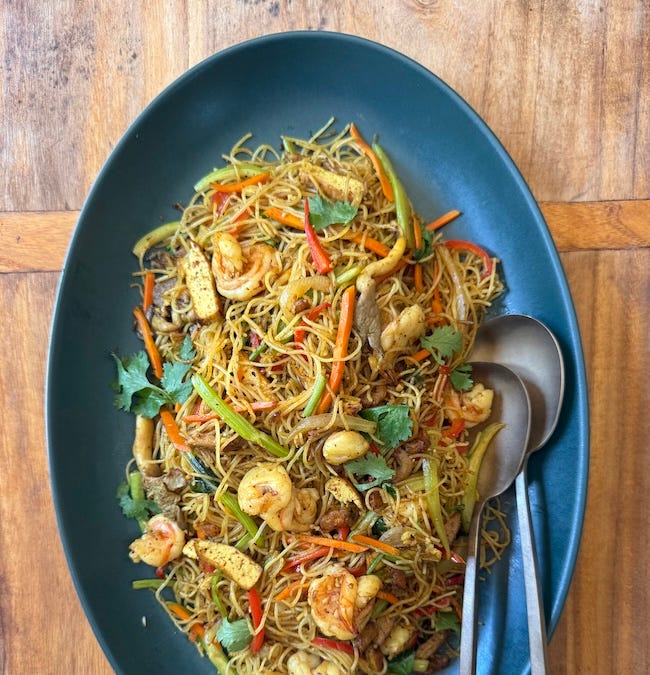
Imagine settling down at your favorite Chinese restaurant, menu in hand, and spotting a vibrant, aromatic dish listed under the noodles section: Singapore Noodles. Its promise of curry-infused vermicelli, plump shrimp, and savory char siu is undeniably enticing. But here's a curious culinary twist that might surprise you: this globally popular dish, known for its distinctive yellow hue and rich flavors, has no roots in Singapore itself. In fact, you'd be hard-pressed to find it on a menu in the Lion City!
This delightful paradox is one of the most fascinating aspects of Singapore Noodles (often called Singapore Mei Fun or 星洲炒米粉 in Cantonese). It’s a dish that has captivated taste buds worldwide, cementing its status as a staple in Chinese restaurants from New York to London, despite its geographical misnomer. So, if not Singapore, where did this iconic stir-fry truly originate, and what makes it such a universally beloved creation?
The Curious Case of Singapore Noodles: A Culinary Misnomer
The biggest reveal about Singapore Noodles is right in its name – it's a fantastic misdirection! Despite its exotic-sounding title, this flavorful stir-fry is not a traditional Singaporean dish. Walk through the bustling hawker centers and vibrant eateries of Singapore, and while you’ll encounter an array of incredible noodle dishes, this particular curry-spiced vermicelli won't be among them. This fact often comes as a surprise to many who have grown up enjoying it as a quintessential "Chinese" dish.
So, where does its story begin? While its exact origins are shrouded in a bit of culinary mystery, most food historians and experts point towards a more likely birthplace: the bustling Chinese kitchens of Hong Kong. It’s widely believed that Cantonese chefs, eager to create dishes with an "exotic" appeal for their local and international clientele, concocted this dish. They likely drew inspiration from the spices and ingredients prevalent in Southeast Asia, particularly the vibrant curry powders, and combined them with classic Cantonese stir-frying techniques and ingredients like char siu (Chinese BBQ pork) and thin rice vermicelli. The name "Singapore" may have simply been added to evoke a sense of intrigue, warmth, and distant flavors, making it stand out on a menu filled with familiar fare.
This delicious invention spread rapidly, becoming a cornerstone of Chinese takeaway menus and restaurant offerings across the United States, Canada, the UK, and Australia. Its popularity stems not from its name, but from its undeniable deliciousness, offering a unique fusion of textures and aromatics that resonate with a global palate.
What Exactly Defines Singapore Noodles? A Flavorful Profile
Regardless of its origin, the defining characteristics of Singapore Noodles are unmistakable. At its heart, it's a dry curry noodle dish, a vibrant symphony of flavors and textures achieved through expert stir-frying. The star of the show is undeniably the thin rice vermicelli, which provides a light yet satisfying base, perfectly absorbing all the delicious seasonings.
Key ingredients that contribute to its signature profile include:
- Curry Powder: This is the soul of the dish. A generous amount of curry powder not only imbues the noodles with their characteristic golden-yellow color but also delivers that warm, aromatic, and mildly spicy flavor that defines Curry Powder & Beyond: The Signature Flavors of Singapore Noodles. Different curry blends can offer varying degrees of heat and complexity, allowing for subtle variations in the dish.
- Proteins: Typically, you'll find a delightful combination of large, succulent shrimp and savory strips of char siu (Chinese BBQ pork). The contrasting textures and rich flavors of these proteins are crucial to the dish's appeal. Scrambled eggs, often thinly sliced into strips, add a touch of richness and another layer of texture.
- Vegetables: A medley of crisp-tender vegetables adds freshness and crunch. Common additions include shredded cabbage, julienned carrots, sliced onions, and vibrant bell peppers. These vegetables not only contribute essential nutrients but also a refreshing counterpoint to the richer ingredients.
- Sauce Base: Beyond the curry powder, a delicate balance of soy sauce often forms the savory foundation, sometimes complemented by a touch of rice vinegar or ketchup for a hint of tanginess and sweetness, enhancing the overall depth of flavor.
The magic happens in the wok, where high heat and skillful tossing ensure each strand of vermicelli is coated, and all ingredients are perfectly cooked to achieve that coveted balance of flavors and textures—tender noodles, crunchy vegetables, and juicy proteins.
The Unbeatable Versatility of Singapore Noodles
One of the enduring reasons for the widespread appeal of Singapore Noodles is its incredible versatility. This dish truly is a culinary chameleon, easily adaptable to suit a vast array of tastes, dietary preferences, and even whatever ingredients you might have on hand. It's this flexibility that makes it a favorite for home cooks and restaurant chefs alike.
For those who love to customize, the possibilities are virtually endless:
- Protein Power: While shrimp and char siu are traditional, you can easily substitute or add other proteins. Thinly sliced chicken breast or thigh, tender strips of beef, or even crispy duck are fantastic additions. For a vegetarian or vegan version, fried tofu cubes, tempeh, or a mix of mushrooms (shiitake, oyster, button) soak up the curry flavor beautifully.
- Vegetable Medley: Don't limit yourself to cabbage and carrots. Broccoli florets, snap peas, bok choy, bean sprouts, baby corn, water chestnuts, and bamboo shoots can all be incorporated to add more color, crunch, and nutritional value. The key is to cut them uniformly for even cooking and add them at the right stage of stir-frying to maintain their crispness.
- Flavor Twists: While curry powder is non-negotiable, you can experiment with different types of curry blends – from mild Madras to a spicier Malaysian variant. A dash of chili oil or fresh chilies can amp up the heat for spice lovers. A squeeze of lime juice at the end can add a bright, zesty finish.
- Dietary Adjustments: Making it gluten-free is simple by ensuring your soy sauce is gluten-free (tamari). As mentioned, a vegetarian or vegan version is easily achieved by omitting animal proteins and eggs, and beefing up the vegetable and tofu content.
This adaptability not only makes Singapore Noodles a fantastic meal for any palate but also an excellent way to use up leftover ingredients in your fridge. It’s a testament to its design that it can accommodate almost any combination of vegetables and proteins, making it a truly practical and delicious option for quick weeknight dinners. For more ideas on how to craft your perfect bowl, check out our guide on Quick & Easy Singapore Noodles: Customize Your Perfect Stir-Fry.
Beyond the Name: Why Singapore Noodles Reigns Supreme in Global Cuisine
Despite the geographical misattribution, the global popularity of Singapore Noodles is undeniable. It's a testament to its intrinsic deliciousness, ease of preparation, and the universal appeal of its vibrant flavors and satisfying textures. It's a dish that has transcended its origin story to become a beloved staple in Chinese restaurants and home kitchens across continents.
One major factor contributing to its success is its remarkable balance of flavors and textures. The delicate chewiness of the vermicelli, the tender bite of the shrimp and char siu, and the refreshing crunch of the stir-fried vegetables create a symphony in every mouthful. The aromatic depth of the curry powder, coupled with the savory notes of soy sauce, ensures a complex and utterly addictive flavor profile that keeps diners coming back for more.
Furthermore, its quick and easy preparation makes it an ideal option for busy individuals and families. A typical batch of Singapore Noodles can be whipped up with only 15-20 minutes of active stir-frying, making it a convenient choice for a satisfying meal without a long wait. This efficiency, combined with its ability to be customized, elevates it beyond just another noodle dish to a versatile and reliable culinary solution.
The dish stands as a wonderful example of culinary evolution and fusion, showcasing how ingredients and techniques can cross borders and inspire new creations that resonate with diverse palates. Its sustained popularity is a clear indicator that good food, bursting with flavor and offering a fulfilling experience, will always find its audience, regardless of where its name suggests it came from.
In conclusion, while Singapore Noodles may not hail from Singapore, its journey from potentially a Hong Kong kitchen to global fame is a fascinating tale of culinary innovation and universal appeal. This vibrant, aromatic stir-fry, with its signature curry flavor, tender rice vermicelli, and medley of proteins and vegetables, offers a satisfying and versatile dining experience that truly stands on its own merits. So, the next time you enjoy a plate of these delicious noodles, remember its intriguing backstory, and savor every flavorful bite of a dish that has successfully conquered the world, one stir-fry at a time.
